Subscribe to our free weekly newsletter
Send news

News tags

mental health  physical activity  earthquake  vacancies  families  public health  children  funding  poverty  health determinants  social  Community development  planning  employment  healthy cities  volunteers  newsletter  youth  volunteering  nutrition  employment opportunity  housing  alcohol and drugs  maori  community engagement  rebuilding  wellbeing  disabilities  Lectures  counselling  Training  earthquake recovery  sustainability  event  community gardens  Community  seminar  Awards  stress  Community Groups  mens health  research  arts  smokefree  culture  men  exercise  migrants  community event  education  environment  resilience  human rights  health  medical  business  sport  conferences  survey  mental wellbeing  Courses  obesity  elderly  support group  environmental health  healthy food  health promotion  violence  pacific health  resources  rebuild  women  race relations  meeting  gardens  workshop  services  leadership  forum  water  disabled  repair  transport  prevention  pacific  dance  fundraising  asian health  sexual health  inequality  cancer  support  disasters  development  mindfulness  dementia  presentation  collaboration  health in all policies  data analysis  recovery  smoking  law  drugs and alcohol  technology  safety  cycling  Sleep  policy  parenting  media  hearing  walking  land  neighbours  social justice  qualification  resilient cities  information  community connection  consultation  oral health  bullying  depression  youth empowerment  young people  activities  non-profit  charity  harm  NURSES  addiction  disease  Communication  alcohol  symposium  submission  anxiety  accessibility  Relationships  eating  economics  Advocacy  eLearning  falls  parking  energy  efficiency  heating  insulation  advice  Eating Disorders  abuse  waste  Matariki  webinar  diabetes  workplace  Film  Climate Change  solutions  urban  management  economy  plan  restoration  Report  Vulnerability  welfare  parks  learning  awareness  emergencies  legislation  injury prevention  reading  Meeting Room  conservation  language  refugees  recreation  built environment  data  venue  urban design  Food  older people  finances  suicide  heritage  gender  recycling  breastfeeding  public  identity  Nursing  submissions  Rainbow  biodiversity  campaign  promotion  Gut Health  diversity  therapy  older adults  sexuality  computing  pollution  School Holidays  Arts Therapy  providers  gambling  Maori health  Cervical cancer  screening  trauma  autism  Governance  treaty of waitangi  care  mentoring  pets  relaxation  Professional Development  pornography  exhibition  history  discrimination  vaping  equity  lockdown  grief  rural  hygiene  participation  tourism  summer  intervention  warning  podcast  science  petition  swimming  roadworks  traffic  wildlife  beaches  pools  immunisation  vaccination  brain  preparation  open day  market  evaluation  noise  music  property  testing  crafts  CALD  cultural diversity  camping  creativity  child health  tamariki  climate action  Pasifika  refugee  migrant  community events  road safety  cyclists  library  Hornby  skills  placemaking  regenerative communities  journey  reflection  regional council  councillors  water management  emergency management  retirement  stress management  Christmas  family  festival  alcohol harm  waterways  planting  health protection  legionnaire's disease  hepatitis  heatwaves  river beds  nesting birds  water safety  natural resources  community organisations  fishing  gardening  workshops  stormwater  biosecurity  volunteer  plant and animal pest management  politics  faith  crime  drugs  pregnancy  native birds  Waimakariri  water quality  schools  early childhood  health professionals  heart disease  kura  school  ethical issues  rangatahi  Linwood  running  donations  whanau  financial pressures  film festival  online  health professional  flooding  conflict  peace  winter  agriculture  stroke  plastic  representation  autumn  memorial  pain  weather 

Taking on Canterbury's largest egeria infestation

Wednesday, November 25, 2026   Posted in: Signatory Notice Board By: Administrator With tags: waterways, water quality

Environment Canterbury media release; 23rd November 2026

Divers will be back in the Ōtākaro Avon River from 30th November to 17th December 2026 to tackle Canterbury’s largest remaining infestation of egeria - an invasive freshwater weed.

Canterbury Regional Council (Environment Canterbury) is working alongside Christchurch City Council and the Department of Conservation on the project. Divers will lay biodegradable hessian matting in targeted areas around Kerrs Reach to suppress Egeria and support its eventual eradication.

Work at a glance

Dates: Monday 30th November to Thursday 17th December 2026 (expected).
Location: Around Kerrs Reach, Ōtākaro Avon River.
What's happening: Divers will lay biodegradable hessian matting to control egeria.
River access: The river will remain open. Keep clear of active dive areas and follow crew guidance.

Why we control egeria

Egeria is a freshwater weed that grows entirely underwater, forming dense beds that can crowd out native plants and alter freshwater habitats. The Ōtākaro Avon River infestation is the largest remaining population and presents a significant risk of spreading to other waterways across the region.

"This is a really important opportunity to tackle Canterbury's largest remaining egeria infestation," says Lauren Piket, Senior Biosecurity Officer.

"We’ve made good progress controlling egeria in recent years, and this next stage gives us the best chance to tackle the remaining infestation and prevent it spreading to other waterways."

Why we’re using hessian matting
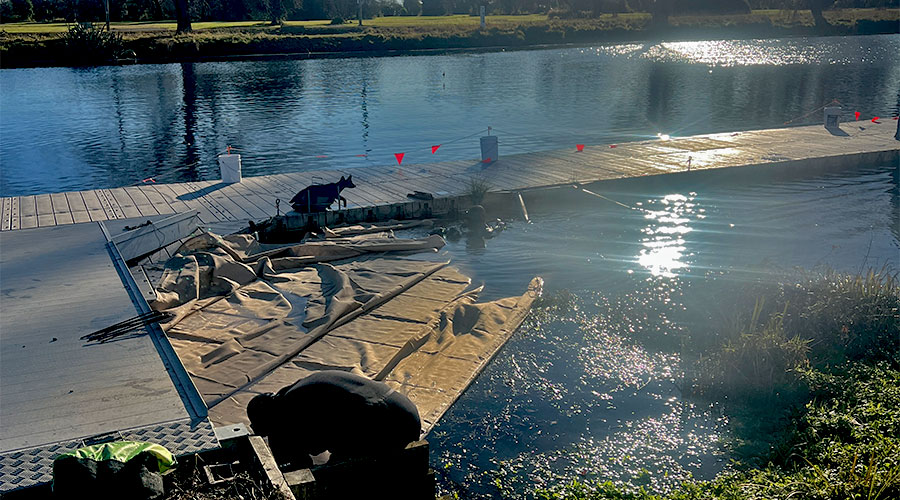
Divers install hessian matting to control egeria.The programme builds on years of control work, including diver hand-weeding and targeted herbicide treatments.

Hessian matting has been used successfully to suppress other aquatic pests and has been identified as the best option for tackling the remaining egeria infestation across a larger area while reducing reliance on herbicides.

The material blocks light, preventing egeria from growing, and naturally breaks down over time.

What river users need to know

River users can expect to see divers working in the water, laying and securing the hessian matting on the riverbed. Anyone using the river is asked to keep clear of active work areas and remain alert for dive flags. Under maritime rules, vessels must travel at no more than five knots when within 200 metres of a displayed dive flag.  

“People will still be able to use the river while the work is underway, but they may need to slow down or adjust their course around active dive areas. We ask river users to keep a safe distance from divers and follow any guidance from crews on the water,” says Lauren.

“We appreciate everyone’s patience while we carry out this work.”

Protecting the Ōtākaro Avon River

The Ōtākaro Avon River is valued for its ecological, cultural, recreational and community importance. Protecting the river from invasive weeds helps support native biodiversity, mahinga kai values and the long-term health of the waterway.  

"This project is about giving native plants the opportunity to thrive and protecting the values that make the Avon such a special place for the community," says Lauren.

Contact our Biosecurity team

Have a question about the egeria control work at Kerrs Reach? Get in touch with our Biosecurity team (0800 324 636 or biosecurity[at]ecan.govt.nz).

Learn about Egeria

Find out how to identify this invasive freshwater weed and how it spreads.