Subscribe to our free weekly newsletter
Send news

News tags

mental health  physical activity  earthquake  vacancies  families  public health  children  funding  poverty  health determinants  social  Community development  planning  employment  healthy cities  volunteers  newsletter  youth  volunteering  nutrition  employment opportunity  housing  alcohol and drugs  maori  community engagement  rebuilding  wellbeing  disabilities  Lectures  counselling  Training  earthquake recovery  sustainability  event  community gardens  Community  seminar  Awards  stress  Community Groups  mens health  research  arts  smokefree  culture  men  exercise  migrants  community event  education  environment  resilience  human rights  health  medical  business  sport  conferences  survey  mental wellbeing  Courses  obesity  elderly  support group  environmental health  healthy food  health promotion  violence  pacific health  resources  rebuild  women  race relations  meeting  gardens  workshop  services  leadership  forum  water  disabled  repair  transport  prevention  pacific  dance  fundraising  asian health  sexual health  inequality  cancer  support  disasters  development  mindfulness  dementia  presentation  collaboration  health in all policies  data analysis  recovery  smoking  law  drugs and alcohol  technology  safety  cycling  Sleep  policy  parenting  media  hearing  walking  land  neighbours  social justice  qualification  resilient cities  information  community connection  consultation  oral health  bullying  depression  youth empowerment  young people  activities  non-profit  charity  harm  NURSES  addiction  disease  Communication  alcohol  symposium  submission  anxiety  accessibility  Relationships  eating  economics  Advocacy  eLearning  falls  parking  energy  efficiency  heating  insulation  advice  Eating Disorders  abuse  waste  Matariki  webinar  diabetes  workplace  Film  Climate Change  solutions  urban  management  economy  plan  restoration  Report  Vulnerability  welfare  parks  learning  awareness  emergencies  legislation  injury prevention  reading  Meeting Room  conservation  language  refugees  recreation  built environment  data  venue  urban design  Food  older people  finances  suicide  heritage  gender  recycling  breastfeeding  public  identity  Nursing  submissions  Rainbow  biodiversity  campaign  promotion  Gut Health  diversity  therapy  older adults  sexuality  computing  pollution  School Holidays  Arts Therapy  providers  gambling  Maori health  Cervical cancer  screening  trauma  autism  Governance  treaty of waitangi  care  mentoring  pets  relaxation  Professional Development  pornography  exhibition  history  discrimination  vaping  equity  lockdown  grief  rural  hygiene  participation  tourism  summer  intervention  warning  podcast  science  petition  swimming  roadworks  traffic  wildlife  beaches  pools  immunisation  vaccination  brain  preparation  open day  market  evaluation  noise  music  property  testing  crafts  CALD  cultural diversity  camping  creativity  child health  tamariki  climate action  Pasifika  refugee  migrant  community events  road safety  cyclists  library  Hornby  skills  placemaking  regenerative communities  journey  reflection  regional council  councillors  water management  emergency management  retirement  stress management  Christmas  family  festival  alcohol harm  waterways  planting  health protection  legionnaire's disease  hepatitis  heatwaves  river beds  nesting birds  water safety  natural resources  community organisations  fishing  gardening  workshops  stormwater  biosecurity  volunteer  plant and animal pest management  politics  faith  crime  drugs  pregnancy  native birds  Waimakariri  water quality  schools  early childhood  health professionals  heart disease  kura  school  ethical issues  rangatahi  Linwood  running  donations  whanau  financial pressures  film festival  online  health professional  flooding  conflict  peace  winter  agriculture  stroke  plastic  representation  autumn  memorial  pain  weather 

Don’t be fooled by the sunshine

Wednesday, November 4, 2026   Posted in: Signatory Notice Board By: Administrator With tags: summer, weather, flooding, recreation

Environment Canterbury media release: 2nd November 2026

A hot, sunny day might seem like the perfect time to head to one of Waitaha Canterbury's rivers. But while Canterbury enjoys hot, dry weather, heavy rain could be falling in the headwaters of alpine rivers.

This summer, what's happening upstream could matter more than the weather above your head. 

El Niño conditions have strengthened considerably since mid-winter and are expected to influence Canterbury’s weather through spring and summer. For the region, this is likely to bring stronger westerly and nor’west winds, drier conditions east of the Main Divide and periods of heavy rain in the Southern Alps.  

That combination creates the risk of what is sometimes called “sunny day flooding”. While it can be hot and fine across the Canterbury Plains, heavy rain may be falling in the headwaters of our alpine rivers, causing water levels downstream to rise rapidly. 

It means a riverbed that looks dry and safe when you arrive may look very different a few hours later – even if the sun is shining.  

Why El Niño increases the risk 

The strong, hot, dry wind of Canterbury’s infamous nor'westers usually means heavy rain in the upper reaches of our alpine rivers such as Waiau-uha, Hurunui, Waimakariri, Rakaia, Rangitata, Waitaki (and Waitaki Lakes) and Ahuriri.

This kind of rain has a significant impact on what’s happening in our local waterways, flood controller Nick Griffiths says.  

"The northwest conditions that generate rain in the alpine parts of these large catchments catch many people out – they cause hot and sunny weather on the plains, coupled with rapidly rising river levels and the potential for these waterways to flood with very little warning," Nick says.
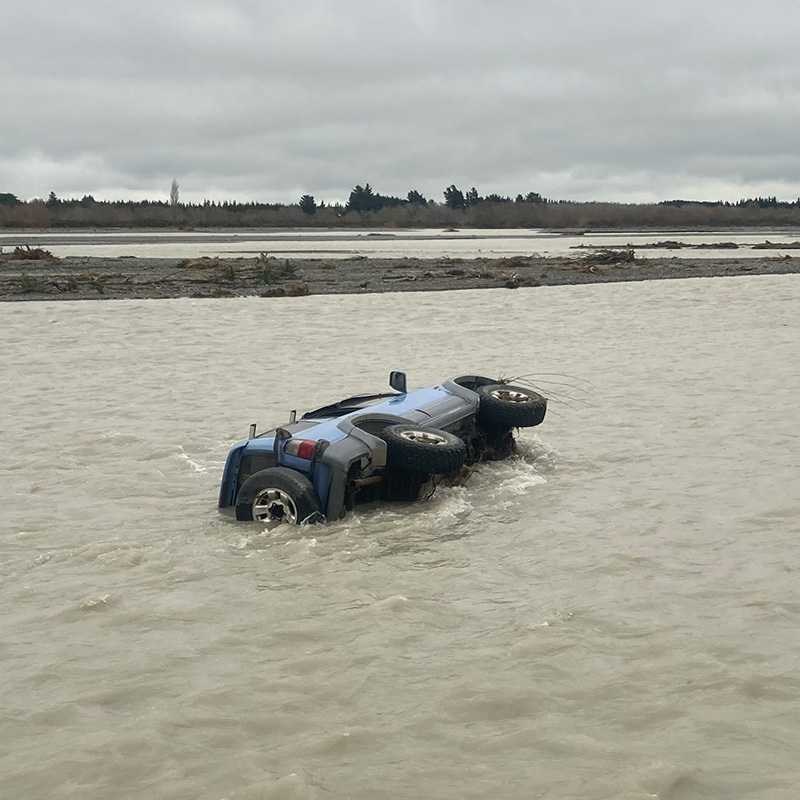
A Four Wheel Drive that got caught out by sunny-day floodingCanterbury’s wide, braided rivers can make the risk harder to spot. People may cross a shallow or dry channel to reach part of the riverbed, only for rising water to cut off their route out later in the day. 

The risk of sunny day flooding isn't just theoretical. 

Regional Park Field Ranger Quentin Garlick has seen vehicles become stranded and even washed downstream when people have been caught out by river levels rising unexpectedly, despite fine weather where they are.

In one past incident, five people had to be rescued from the roof of their vehicle in the Waimakariri River by the Westpac Rescue Helicopter, after becoming trapped by floodwaters. On another day, three vehicles became stuck in the river. 

"It can be a perfectly sunny day and there's no water at all coming down the river when suddenly it floods," says Quentin Garlick. 

Check the weather before you go
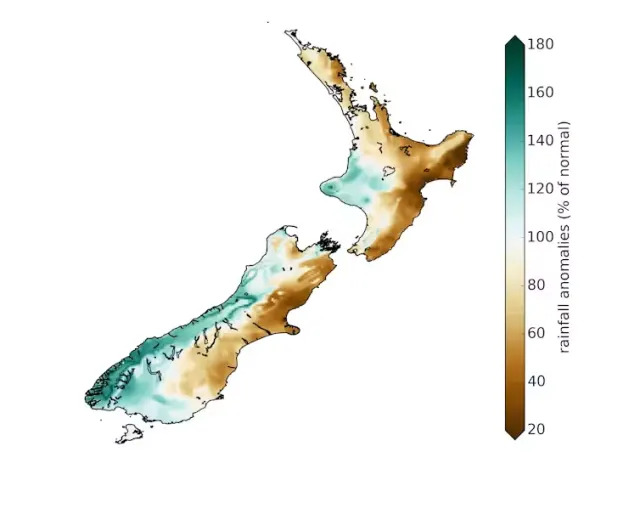
Rainfall patterns during previous strong El Niño summers show much wetter conditions west of the Southern Alps and drier conditions across eastern areas. Similar patterns could occur again during the 2026/27 El Niño. Graphic: Earth Sciences New Zealand."It can happen so quickly. The problem is that people aren’t checking weather conditions in the mountains before they rock on down to the river.”

If there is a nor'west blowing or even a small amount of flooding, Quentin’s advice is simple: stay away.

"Sometimes we get several groups of people going onto riverbeds in flood. That’s a dangerous idea – if it’s a fast flood, there’s no way you could get everyone off the riverbed before it all turns to chaos," he says.

"Cars can be washed right off the riverbed and putting yourself in harm’s way by entering flood waters puts others at risk who might try to help you when you get into trouble."

Don’t let the sunshine fool you

Conditions in the mountains matter just as much as what you can see at the river. Before heading out:

If a nor’wester is blowing, rain is forecast in the mountains or river levels are rising, stay off the riverbed. If in doubt, keep out.